
City Overview
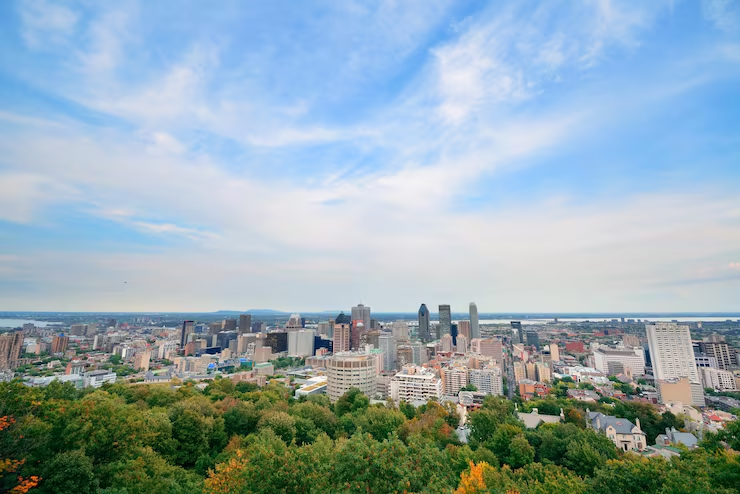
Cheboksary is the capital of the Chuvash Republic, is about 650 km east of Moscow on the Volga River. The population is around half a million. It’s quieter than Moscow and considerably cheaper. For a medical student six years deep into a degree, that’s not a bad trade.
The city has what you need day-to-day: universities, hospitals, markets, and shopping centres. There are few local markets that stock Indian groceries, and the campus canteen too has a dedicated Indian food section. For downtime, there’s the Chuvash National Museum, the Vvedensky Cathedral, the Mother Patroness Monument, and a decent stretch of embankment along the Volga.
- Weather
Winters here are long and genuinely cold in the month of December through February regularly drops to between -10 and -20°C. Summers are warm, with July and August hitting 25–30°C. Spring and autumn are brief.
Students from warmer parts of India almost universally find the first winter a shock. The hostels over here are centrally heated and well-insulated, which takes the edge off. You’ll require a thermal layers, a proper winter coat, and boots that can handle cold.
- Transportation
Buses and trolleybuses cover the route between campus, the city centre, and most residential areas. Taxis are bit affordable. For longer trips to Moscow or elsewhere, the rail is the way to go.
New students get airport pickup from the university on arrival. Senior students from the Indian community are usually willing to help newcomers navigate the system in the first few weeks it’s an established pattern.
- Safety
Cheboksary is generally safe for students. The Indian student population at the university is well established, and new arrivals typically find their social footing quickly by the existing networks. Hostels have 24-hour security, CCTV, and controlled access. It is mandatory to carry university ID and need to use standard travel sense.
The international student office handles emergency contacts and can assist with legal, medical, or administrative problems.
- Hostels
There are 10 residential hostels on campus. Male and female students are housed separately different floors or different buildings depending on the hostel. Rooms are shared between two or three students, and preferences can usually be indicated at registration.
Each floor has shared kitchens, bathrooms, and toilets. Rooms come furnished with beds, study tables, wardrobes, and storage. Washing machines are available in the buildings. Heating runs all winter, hot water is round the clock, and internet works both on campus and in the hostels. Outside visitors need approval from the Dean’s office before entering.
- Food
The canteen serves meals twice a day. There’s a separate Indian mess section that includes roti, rice, dal, vegetarian and non-vegetarian options, both type of food are cooked separately. Cooking yourself is an option. Hostel kitchens are available, and Indian spices, lentils, and basic groceries are stocked at a few local markets.
- Sports
Swimming pool, gym, basketball, volleyball, football, cricket courts all has profound setup. Sports sections operate through the student clubs structure, with competitions between faculties and other universities. If staying active matters to you, the facilities are more than workable.
- Health Services
On-campus medical services are available year-round. Because this is a medical university, students also have access to affiliated hospitals for anything serious. Medical insurance is factored into the standard fee structure and it is worth confirming before you arrive.